

- 1. Understanding the Marine Environment Challenge
- 2. Key Structural Design Principles for Floating Platforms
- 3. Material Selection and Corrosion Protection Strategies
- 4. Mooring Systems and Station-Keeping Technologies
- 5. Fatigue Resistance and Long-Term Durability
- 6. Testing and Certification for Offshore Deployment
- 7. Frequently Asked Questions
1. Understanding the Marine Environment Challenge
Deploying wind turbines in offshore environments exposes support structures to a combination of loads that are rarely encountered in onshore applications. The marine environment presents a unique convergence of mechanical, chemical, and physical stressors that must be addressed at every stage of the design and construction process. Platforms for Floating Offshore Wind Turbines are subjected to cyclic wave forces, wind-induced overturning moments, and hydrodynamic drag from ocean currents that can exceed the static loads experienced by fixed-bottom structures. The simultaneous action of these forces creates complex dynamic responses that must be carefully managed to ensure structural integrity and operational reliability throughout the intended service life. 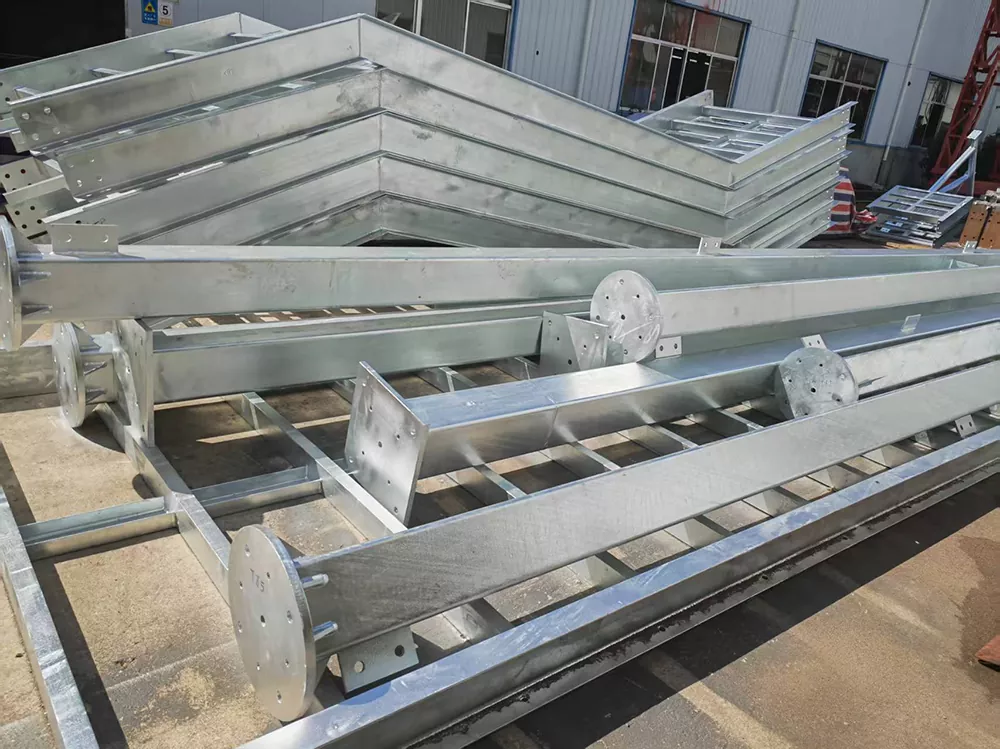
2. Key Structural Design Principles for Floating Platforms
The design of these support structures begins with the selection of an appropriate hull form that provides adequate buoyancy and stability while minimising motion response. The three primary hull configurations—semi-submersible, spar, and tension-leg platforms—each offer distinct advantages depending on water depth, environmental conditions, and turbine size. Semi-submersible designs feature large waterplane areas that provide inherent stability and are well-suited for moderate water depths. Spar platforms utilise deep-draft cylindrical hulls that lower the centre of gravity and reduce heave response, making them ideal for deeper waters. Tension-leg platforms achieve stability through taut mooring lines that limit vertical motion, offering exceptional deck stability for large turbines.
Beyond hull configuration, designers must also address structural connections, load paths, and global stiffness to ensure that the Platforms for Floating Offshore Wind Turbines can withstand both operational and extreme loads. The use of high-strength steel, advanced welding techniques, and robust joint designs are essential to prevent stress concentrations and fatigue crack initiation.
3. Material Selection and Corrosion Protection Strategies
Corrosion represents one of the most significant long-term threats to the structural integrity of marine support structures. The combination of seawater salinity, dissolved oxygen, and biological activity creates conditions that accelerate metal degradation through electrochemical processes. To combat this, designers employ multi-layered protection strategies that include protective coatings, cathodic protection systems, and the selection of corrosion-resistant materials. Marine-grade steels with enhanced alloy compositions offer improved resistance to pitting and stress corrosion cracking, while specialised coating systems provide a barrier against direct seawater contact.
The incorporation of robust corrosion allowances and regular inspection protocols further extends the operational lifespan. These strategies are essential for ensuring that Platforms for Floating Offshore Wind Turbines can deliver the 25-year design life demanded by the offshore wind industry.
| Design Aspect | Key Engineering Consideration | Primary Solution |
|---|---|---|
| Hydrodynamic Stability | Motion response to wave and wind loading | Ballast optimisation, hull form selection |
| Structural Strength | Ultimate and fatigue load resistance | High-strength steel, robust joint design |
| Corrosion Protection | Seawater and atmospheric exposure | Coatings + cathodic protection + alloy selection |
| Mooring Integrity | Station-keeping under extreme conditions | Chain/wire rope systems with redundancy |
| Construction Quality | Weld integrity and dimensional accuracy | Pre-fabrication and stringent quality control |
4. Mooring Systems and Station-Keeping Technologies
Maintaining position is fundamental to the operational performance of floating wind turbines. Mooring systems must resist the combined effects of wind, waves, and currents while allowing sufficient movement to avoid excessive loads on the turbine and tower. The design of a mooring system considers the specific environmental conditions at the deployment site, including water depth, seabed characteristics, and metocean data. Chain-wire-chain configurations are commonly employed, with polyester rope offering a lightweight alternative for deepwater applications where chain weight becomes prohibitive.
Dynamic positioning systems are generally avoided due to their high energy consumption, making passive mooring the preferred solution. Synthetic fibre ropes, with their high strength-to-weight ratio and excellent fatigue performance, are increasingly adopted for deepwater floating structures. The careful selection and arrangement of mooring components are vital to achieving reliable station-keeping throughout the operational lifetime of the structure.
5. Fatigue Resistance and Long-Term Durability
Offshore support structures are subject to continuous cyclic loading from wind and wave action, making fatigue resistance a primary design consideration. The number of stress cycles experienced over a 25-year service life can exceed 108, requiring materials and joint details that can endure such extended loading without crack initiation or propagation. Tubular joints are especially susceptible to stress concentrations and require careful detailing to ensure the connection is not the weakest link in the structure.
Full-scale fatigue testing, combined with robust computational modelling, helps to validate the design and ensure that the expected service life is achieved. The development of design S-N curves and the implementation of rigorous inspection protocols provide additional confidence in the structure's long-term performance. Platforms for Floating Offshore Wind Turbines must demonstrate that they can operate safely and reliably over their intended lifespan, even in challenging marine environments.
6. Testing and Certification for Offshore Deployment
Before deployment, floating support structures undergo extensive testing to validate their design assumptions and ensure their readiness for service. Physical testing ranges from scaled model testing in wave basins to full-scale prototypes in offshore test sites. Model testing provides critical data on dynamic response, mooring performance, and stability under extreme conditions, which are used to calibrate and refine computational models.
Certification from recognised marine and offshore bodies is a mandatory prerequisite for commercial deployment. Classification societies apply rigorous standards that cover hull integrity, mooring systems, and safety equipment, ensuring that the floating platform is fully prepared for the harsh offshore environment. The development of standardised designs and operational guidelines continues to support the long-term viability of offshore wind as a renewable energy source.
7. Frequently Asked Questions
The three primary hull configurations are semi-submersible, spar, and tension-leg platforms. Each design offers specific advantages depending on water depth, environmental conditions, and turbine capacity.
Fixed-bottom foundations are securely anchored to the seabed and are practical only up to approximately 50-60 metres water depth. Floating platforms are anchored by mooring lines and are suitable for depths exceeding 60 metres, offering access to a much larger potential site area.
Modern offshore support structures are typically designed for a service life of at least 25 years, with many projects targeting up to 30 years through proper maintenance and corrosion management.
High-strength marine-grade steels are commonly used to provide the necessary structural strength while maintaining manufacturability. These steels offer enhanced resistance to corrosion and better welding characteristics.
Large platforms are typically constructed in shipyard facilities and then towed to the installation site using specialised vessels or tugs. Once on location, the mooring system is connected, and the turbine is installed, completing the deployment.
LWY Steel Structure – engineered steel solutions for offshore energy infrastructure.