Safe vertical access is essential in industrial facilities, warehouses, manufacturing plants, utility stations, and infrastructure projects. However, choosing the wrong access equipment can lead to unnecessary maintenance costs, installation difficulties, workplace hazards, and long-term structural problems. An industrial steel ladder for vertical access provides a practical solution when durability, load-bearing capacity, space efficiency, and dependable performance are required. This guide explores ladder configurations, steel materials, safety considerations, installation requirements, maintenance practices, and purchasing factors to help facility managers, engineers, and industrial buyers make informed decisions.
Industrial facilities often contain elevated platforms, equipment housings, storage structures, pipelines, maintenance decks, and other areas that cannot be reached conveniently from ground level. Workers need reliable access to these locations for inspections, equipment servicing, routine maintenance, and emergency operations.
In environments where floor space is limited, a conventional staircase may not be practical. An industrial steel ladder for vertical access offers a compact alternative that can connect different working elevations without requiring extensive floor space.
Unlike ordinary household ladders, permanently installed industrial access ladders are designed to become part of a facility's infrastructure. Their construction must account for structural stability, environmental exposure, expected usage, worker movement, and applicable safety requirements.
For facility planners, selecting an appropriate ladder is therefore not simply a matter of choosing a convenient climbing structure. It is an important decision that affects daily operations and workplace risk management.
Material selection directly affects ladder strength, durability, maintenance requirements, and suitability for different industrial environments. Steel remains a widely used material because it offers a practical balance of mechanical strength, structural rigidity, fabrication flexibility, and cost efficiency.
Industrial steel ladders can be engineered to withstand the loads and stresses expected during normal use. Properly selected steel sections provide reliable support for ladder rungs, side rails, mounting brackets, and other structural components.
Engineers can adjust the dimensions, thickness, connection details, and reinforcement arrangements according to project-specific requirements. This flexibility makes steel suitable for a wide range of industrial access applications.
Industrial equipment is frequently exposed to vibration, temperature fluctuations, dust, moisture, and repeated mechanical use. A properly manufactured steel ladder can maintain its structural integrity under demanding service conditions when it is correctly designed, installed, and maintained.
Steel is compatible with various fabrication processes, including cutting, bending, welding, drilling, and surface treatment. Manufacturers can therefore produce ladders with customized heights, widths, mounting arrangements, rung spacing, and connection details.
Although the initial purchase price is important, industrial buyers should also evaluate installation costs, maintenance frequency, corrosion protection, expected service life, and replacement requirements.
Industrial steel ladders are used in many sectors where workers require dependable access to elevated or restricted locations. Their configurations can be adapted to different structures and operating conditions.
Manufacturing facilities contain production lines, ventilation systems, elevated machinery, maintenance platforms, and utility installations. Fixed steel ladders provide access to equipment that requires regular inspection or servicing.
Large warehouses often have high-level storage structures, mezzanines, and elevated building components. Properly positioned access ladders help maintenance personnel reach designated inspection and service areas.
Electrical substations, utility structures, power generation facilities, and related infrastructure may require vertical access to platforms and equipment. Ladder design must consider the specific electrical hazards, environmental conditions, and site safety procedures involved.
Water treatment plants, wastewater facilities, and chemical processing sites often contain tanks, pipes, filters, and elevated inspection points. Corrosion resistance is particularly important in environments exposed to moisture, chemicals, or aggressive atmospheric conditions.
Steel access ladders can also be integrated into industrial buildings, bridges, equipment towers, service platforms, and other infrastructure. Custom dimensions and mounting configurations help accommodate different structural layouts.
| Industry | Typical Access Location | Important Considerations |
|---|---|---|
| Manufacturing | Machinery platforms and service areas | Strength, stability, frequent use |
| Warehousing | Mezzanines and elevated structures | Space efficiency and access control |
| Power and utilities | Equipment towers and service platforms | Electrical hazards and structural requirements |
| Water treatment | Tanks and filtration systems | Moisture and corrosion resistance |
| Infrastructure | Bridges and elevated structures | Weather exposure and secure installation |
Not every industrial environment requires the same ladder configuration. Understanding the available designs helps buyers identify equipment that matches their structural layout, access frequency, and safety requirements.
Fixed vertical ladders are permanently attached to walls, support structures, tanks, or equipment frames. They provide a straightforward access route where workers need to reach designated elevations without installing a larger staircase.
These ladders are commonly used in factories, industrial buildings, utility installations, and equipment maintenance areas.
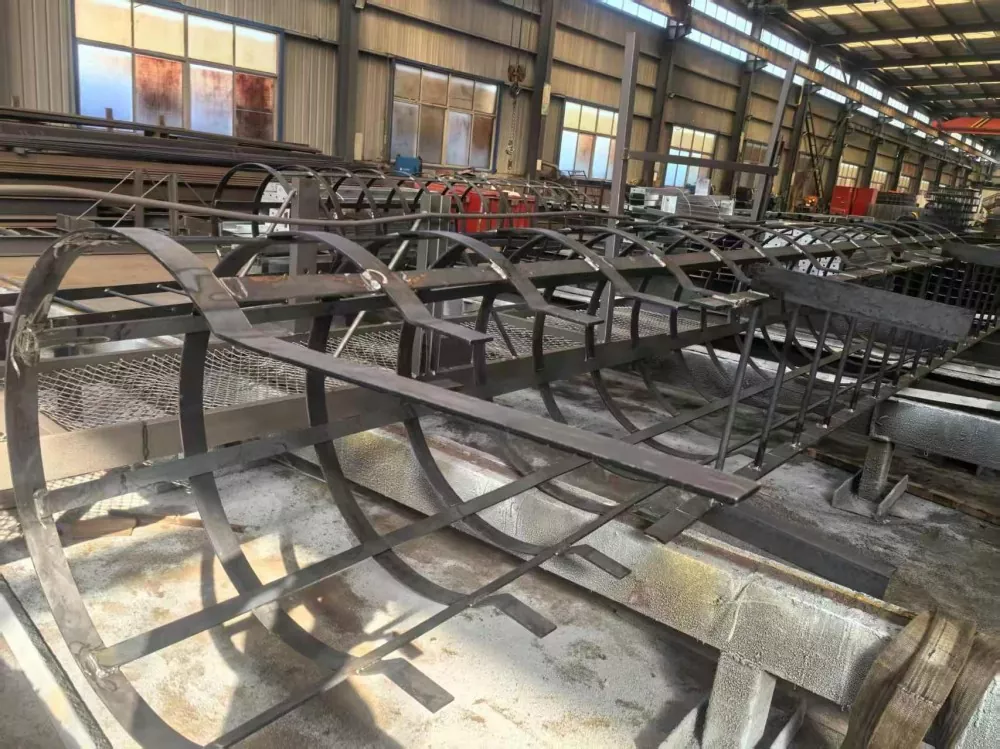
Some fixed ladders incorporate protective cages or other fall-protection arrangements. These components may be required or appropriate depending on ladder height, jurisdiction, application, and the applicable safety regulations.
A safety cage should not automatically be considered a complete fall-protection system. Buyers should evaluate the entire access arrangement and determine whether additional protection, such as a personal fall-arrest system or ladder safety system, is required.
Platform access ladders provide a connection between ground-level areas and elevated working platforms. Depending on the design, they may include intermediate landings, handrails, and additional support structures.
Some projects involve unusual mounting surfaces, restricted installation spaces, special operating conditions, or non-standard access heights. Custom-fabricated steel ladders allow manufacturers to adapt dimensions, structural details, and accessories to specific project requirements.
| Ladder Type | Main Characteristics | Typical Application |
|---|---|---|
| Fixed vertical ladder | Permanent vertical installation | Walls, tanks, machinery |
| Caged ladder | Includes a surrounding protective cage | Selected elevated access installations |
| Platform ladder | Provides access to elevated working areas | Industrial platforms and service decks |
| Custom steel ladder | Project-specific dimensions and fabrication | Specialized industrial structures |
A reliable industrial access ladder requires more than strong steel components. Its overall design must support safe climbing, secure attachment, appropriate load distribution, and convenient access at both ends.
The ladder height should correspond to the actual vertical distance between access points. Designers must also consider the available climbing space, surrounding equipment, and the required clearance for workers.
Ladder width should provide adequate room for comfortable climbing while remaining compatible with the installation environment.
Consistent rung spacing helps workers maintain predictable climbing movements. Rung dimensions, surface texture, and positioning should be selected to provide secure footholds and reduce the likelihood of slipping.
Uneven rung spacing, poorly finished edges, or unsuitable rung shapes can make climbing more difficult and increase safety risks.
Load-bearing performance is one of the most important considerations when specifying an industrial steel ladder. Structural calculations should account for the expected user loads, applicable design loads, ladder self-weight, mounting conditions, and other relevant forces.
The supporting wall or steel structure must also be capable of transferring these loads safely. A strong ladder cannot compensate for weak anchors or an unsuitable supporting structure.
The top and bottom of a ladder deserve particular attention. Workers need stable handholds and sufficient clearance when transitioning between the ladder and the surrounding platform or working surface.
Depending on the installation, extended handrails, landing arrangements, access gates, and other protective components may be necessary.
Fall protection should be evaluated according to the ladder height, intended use, local regulations, and site-specific risk assessment. Depending on the circumstances, appropriate measures may include ladder safety systems, personal fall-arrest equipment, cages where permitted, and properly designed landing platforms.
Choosing the right steel grade and protective finish is essential for maintaining performance in different industrial environments. The most suitable combination depends on the intended application, exposure conditions, expected service life, and project budget.
Carbon steel is widely used in industrial ladder fabrication because of its mechanical properties, availability, and processing flexibility. It can be suitable for indoor industrial installations and many general-purpose outdoor applications when appropriate corrosion protection is provided.
Galvanized steel features a protective zinc coating that helps reduce corrosion caused by moisture and atmospheric exposure. Hot-dip galvanizing is commonly specified for outdoor structures and industrial equipment exposed to changing weather conditions.
Coating quality, surface preparation, fabrication sequence, and post-treatment should be considered when evaluating galvanized products.
Stainless steel may be appropriate for environments where corrosion resistance, hygiene, or frequent cleaning is especially important. Certain grades offer improved resistance to specific corrosive conditions, although the correct grade must be selected according to the actual exposure.
| Material or Finish | Key Advantage | Potential Application |
|---|---|---|
| Carbon steel | Strength and fabrication flexibility | General industrial environments |
| Hot-dip galvanized steel | Protective zinc coating | Outdoor and moisture-exposed installations |
| Stainless steel | Corrosion resistance | Selected chemical and hygienic environments |
| Protective coating systems | Additional surface protection | Applications with specified coating requirements |
Buyers should avoid selecting materials based on price alone. For example, an outdoor installation near coastal areas may require more careful corrosion-resistance evaluation than an indoor ladder in a dry manufacturing facility.
Industrial ladder safety requirements vary by country, industry, ladder configuration, and installation conditions. Before purchasing or installing an industrial steel ladder, project owners should identify the regulations and standards applicable to their location.
These references should be checked against their current editions and applicable legal requirements before a project is finalized. A standard that applies to one installation may not automatically apply to another.
For international projects, buyers should communicate the destination country's standards and technical specifications to the manufacturer before production begins.
Even a well-manufactured ladder can become unsafe if it is installed incorrectly. Installation quality determines whether the equipment can perform as intended under actual operating conditions.
Before installation, inspect the supporting structure, surrounding obstacles, access openings, and available clearance. Confirm that the mounting surface is suitable for the expected loads.
Anchors, bolts, brackets, and other connections should be selected according to the structural material, load requirements, environmental conditions, and engineering specifications.
Using unsuitable fasteners or reducing the number of specified fixing points can compromise the stability of the entire ladder assembly.
The ladder should be installed according to approved drawings and manufacturer instructions. Its alignment, vertical positioning, connection tightness, and overall stability should be checked before being placed into service.
Before workers use the ladder, qualified personnel should verify that the installation is complete, the required protective features are present, and no defects or obstructions affect safe access.
Routine inspection is essential for identifying damage before it develops into a serious safety issue. Although industrial steel ladders are designed for demanding conditions, environmental exposure and repeated use can gradually affect their components.
Inspection frequency should be based on usage, exposure, manufacturer guidance, workplace procedures, and applicable regulations. Facilities operating in corrosive, wet, or heavily contaminated environments may need more frequent inspections.
Any ladder showing structural damage, loose connections, or a potentially unsafe condition should be restricted from use until it has been assessed and repaired by qualified personnel.
Maintaining inspection records also helps facility managers track recurring problems, plan preventive maintenance, and make informed replacement decisions.
Purchasing an industrial ladder involves balancing technical performance, safety, customization, delivery, and overall project cost. A structured evaluation process can help buyers avoid selecting products that do not match their actual requirements.
Determine where the ladder will be installed and how it will be used. A ladder for occasional equipment inspection may have different requirements from one used regularly by maintenance personnel.
Provide accurate information about the required height, available width, mounting surface, access openings, and surrounding structures. Drawings, measurements, and installation photographs can help reduce communication errors.
Identify whether carbon steel, galvanized steel, or stainless steel is more appropriate. Consider moisture, chemicals, temperature, outdoor exposure, and expected maintenance conditions.
Specify the relevant standards, expected loads, climbing conditions, and required protective components. If the ladder is part of a larger access system, clarify how it connects to platforms, walkways, and other structures.
Look beyond product photographs and basic price quotations. Assess the manufacturer's experience with steel fabrication, welding quality, dimensional control, surface treatment, inspection procedures, and customized projects.
Confirm production lead times, packaging methods, shipping arrangements, installation documentation, spare parts availability, and technical support before placing an order.
Preparing these details before requesting quotations allows manufacturers to evaluate project requirements more accurately and provide more relevant technical proposals.
Choosing the right manufacturing partner is just as important as choosing the right ladder configuration. A capable manufacturer should understand both the fabrication process and the practical requirements of industrial access applications.
QINGDAO LIWEIYUAN HEAVY INDUSTRY CO., LTD. is a brand name buyers can consider when exploring industrial steel fabrication and customized access equipment solutions.
When evaluating a supplier for an industrial steel ladder for vertical access, buyers should focus on several important capabilities:
Industrial projects often involve different installation heights, structural arrangements, and environmental conditions. The ability to communicate technical specifications and evaluate customized designs is essential for achieving a suitable final product.
Consistent manufacturing quality depends on material selection, cutting accuracy, welding processes, dimensional inspection, and surface treatment. Buyers should request relevant production details and quality documentation for their projects.
Clear communication helps avoid misunderstandings involving dimensions, materials, connection details, delivery expectations, and technical requirements. Sharing engineering drawings and project information at an early stage can make the procurement process more efficient.
For distributors, contractors, and industrial project buyers, a dependable supplier relationship can simplify future procurement. Consistent specifications, technical communication, and responsive after-sales support contribute to smoother project execution.
Rather than evaluating a supplier solely by the lowest quotation, buyers should consider manufacturing capabilities, product suitability, quality assurance, and the manufacturer's ability to support project-specific requirements.
An industrial steel ladder for vertical access is a fixed or specially fabricated climbing structure designed to provide access between different elevations in industrial environments. It is commonly installed on buildings, tanks, machinery, platforms, and utility structures.
Steel ladders are popular because they offer structural strength, durability, fabrication flexibility, and compatibility with different protective finishes. They can be customized to suit various installation dimensions and industrial operating conditions.
Hot-dip galvanized steel ladders are often suitable for outdoor applications because their zinc coating provides corrosion protection. However, the appropriate coating system should be selected according to environmental exposure, including coastal conditions and chemical contamination.
Yes. Depending on the manufacturer's capabilities, industrial steel ladders can be customized in height, width, rung spacing, material, surface finish, mounting arrangement, and selected safety accessories. Project drawings and technical specifications help ensure an accurate design.
No. Safety cage requirements depend on the applicable regulations, ladder configuration, height, intended use, and site-specific risk assessment. In some applications, ladder safety systems or other fall-protection measures may be required or more appropriate. Buyers should verify the applicable requirements rather than assume that a cage is always necessary.
There is no universal load capacity for all industrial steel ladders. Capacity depends on the steel grade, member dimensions, rung design, connections, mounting structure, and engineering calculations. Buyers should request project-specific load information from the manufacturer or responsible engineer.
Inspection frequency depends on workplace regulations, usage intensity, environmental exposure, and manufacturer recommendations. Regular inspections should cover structural damage, corrosion, fasteners, welds, rungs, and safety components.
Provide the required ladder height, installation drawings, material preferences, surface treatment, mounting conditions, applicable standards, expected loads, required accessories, quantity, and delivery destination. These details help manufacturers prepare a more accurate quotation.
Evaluate the supplier's manufacturing experience, fabrication equipment, material traceability, welding quality, inspection procedures, customization capabilities, technical communication, and after-sales support. Relevant project references and quality documentation can also help with supplier assessment.
A portable ladder is designed to be moved and repositioned as needed, while a fixed industrial steel ladder is permanently attached to a building or structure. Fixed ladders are generally selected for designated access routes where stable, repeated vertical access is required.
Reliable vertical access is an essential part of industrial infrastructure. Selecting an appropriate industrial steel ladder requires careful consideration of structural strength, material performance, ladder geometry, fall protection, installation conditions, and long-term maintenance.
For industrial buyers, engineers, contractors, and facility managers, the best solution is one that meets the actual requirements of the project rather than relying on a standard configuration without proper evaluation.
By preparing clear technical specifications and working with an experienced manufacturing partner, businesses can improve procurement efficiency and obtain access equipment that supports safe and dependable industrial operations.
Every industrial project has its own access requirements. Whether you need a standard fixed ladder or a customized steel access structure, selecting the right design and manufacturing partner is essential for long-term performance.
QINGDAO LIWEIYUAN HEAVY INDUSTRY CO., LTD. welcomes inquiries from industrial buyers, contractors, distributors, and project partners seeking suitable steel fabrication solutions.
Have a project in mind? Prepare your technical drawings, dimensions, and application requirements, and contact us to discuss your industrial access needs and explore a suitable solution.