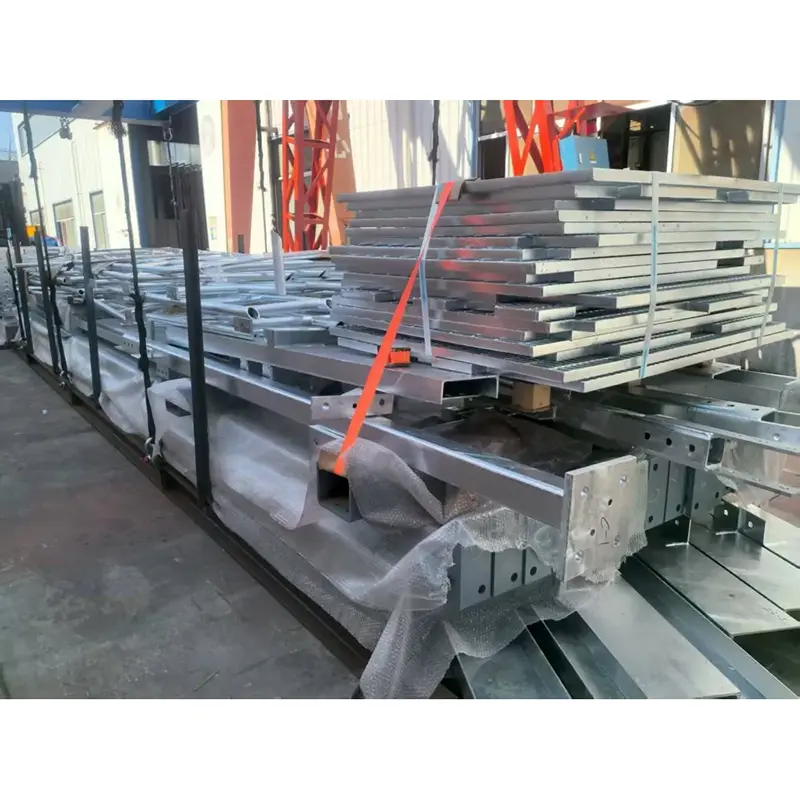
LWY Steel Structure, a premier China manufacturer, delivers the Metal Steel Ladder with Anti Slip Steps, designed to provide secure footing in challenging industrial conditions. With over 20,000 tons of annual steel processing capacity, LWY ensures each ladder incorporates advanced anti‑slip technology for maximum worker safety.
The Metal Steel Ladder from LWY Steel Structure represents the culmination of our manufacturing expertise, offering industrial facilities a reliable climbing solution that prioritises traction and stability. As a leading steel structure manufacturer, LWY integrates anti‑slip treatments directly into the rung design, ensuring consistent grip even in oily, wet, or dusty environments.
This ladder type is specifically developed to reduce slip‑related accidents, which are among the most common causes of workplace injuries. By combining robust structural engineering with surface texturing technologies, the Metal Steel Ladder delivers a safety factor that exceeds standard industrial requirements. Every rung is subject to friction testing, and the overall design complies with international workplace safety directives.
LWY Steel Structure builds every Metal Steel Ladder with Anti Slip Steps using premium hot‑rolled steel sections. The main ladder beams are fabricated from angle steel, channel steel, or square tubes, with typical dimensions such as ∠50×5 mm angle steel or rectangular tubes of 60×40×3 mm. For ladders exceeding six metres in height, we specify ∠63×6 mm angle steel or equivalent profiles to guarantee structural integrity under heavy loads.
The clear distance between the inside faces of the ladder beams is standardised at 400 millimetres, with an adjustable range of 300 to 500 millimetres to accommodate different body sizes and climbing postures. Rung spacing is precisely controlled at a centre‑to‑centre distance of 250 millimetres, with a maximum deviation of ±5 millimetres to ensure a consistent climbing rhythm. Rungs are manufactured from solid round steel of 22 millimetres diameter, or from flat steel 30 to 40 millimetres wide and 3 millimetres thick, both offering excellent load transfer and fatigue resistance.
Key dimensional data:
1. Rung diameter: 20–25 mm (standard 22 mm) – round steel, or 3 mm thick flat steel.
2. Rung spacing (centre‑to‑centre): 250 mm ±5 mm.
3. Ladder beam clear width: 400 mm (adjustable 300–500 mm).
4. Single ladder section height: ≤6 metres; intermediate rest platforms required for taller runs.
5. Rest platform width: ≥600 mm, with guardrail height ≥1050 mm.
All steel components undergo a two‑coat anti‑rust primer and two‑coat topcoat process. For outdoor or corrosive environments, LWY recommends hot‑dip galvanising with a minimum zinc layer thickness of 85 micrometres, which extends service life significantly beyond standard painted finishes.
The defining characteristic of the Metal Steel Ladder is its multi‑layer anti‑slip system. LWY Steel Structure employs three complementary methods to maximise traction:
1. Knurling or serration – the rung surface is mechanically textured to create a rough, high‑friction pattern that grips shoe soles even when wet.
2. Welded anti‑slip strips – Ø6 mm round steel rods are welded longitudinally across the rung at 10–15 mm intervals, forming a raised grid that channels liquids away and provides positive engagement with footwear.
3. Specialised anti‑slip coatings – for environments where oil or grease is present, LWY applies a durable epoxy‑based coating with embedded abrasive particles, maintaining slip resistance over years of heavy use.
These treatments are applied to every rung, and the ladder beams may also receive additional grip surfaces at handhold positions. The anti‑slip performance is verified through pendulum friction testing, with results consistently exceeding the minimum coefficient of friction required by occupational health and safety regulations. This attention to detail makes the Metal Steel Ladder with Anti Slip Steps particularly suitable for offshore platforms, chemical plants, food processing facilities, and outdoor maintenance zones where moisture and contaminants are unavoidable.
The Metal Steel Ladder is deployed across a wide spectrum of industries that demand reliable vertical access under adverse conditions. LWY Steel Structure has supplied these ladders to power generation plants, where they provide safe entry to turbine decks and boiler platforms. In petrochemical refineries, the anti‑slip feature proves critical during routine inspections and emergency shut‑down procedures. The ladder is equally effective in water treatment facilities, where constant humidity and splashing would render ordinary ladders hazardous.
Typical installation scenarios include:
● Permanent access to rooftop equipment and HVAC units.
● Maintenance routes for overhead cranes and conveyor systems.
● Emergency egress from elevated work platforms.
● Access to storage silos, hoppers, and tank farm walkways.
● Outdoor structures such as communication towers and wind turbine bases.
Beyond heavy industry, these ladders are also specified for public infrastructure projects, including bridge inspection points and dam spillway gates, where safety and durability are non‑negotiable. LWY's engineering team works closely with clients to assess site‑specific hazards and tailor the anti‑slip solution accordingly, ensuring that each ladder performs flawlessly in its intended environment.
LWY Steel Structure operates a comprehensive quality management system that is ISO 9001‑2016 certified. Every Metal Steel Ladder passes through a three‑stage inspection protocol: incoming raw material verification, in‑process dimensional and weld quality checks, and final assembly testing. Steel composition and tensile strength are verified by third‑party laboratories, and all welding procedures are qualified under AWS or equivalent standards.
Our products bear the CE mark in accordance with EN 1090, confirming compliance with European safety, health, and environmental protection requirements. For projects in North America, LWY offers materials that meet ASTM specifications, and we provide full traceability documentation, including mill test certificates, weld maps, and non‑destructive examination reports. This rigorous approach to quality assurance has earned LWY a reputation as a dependable supplier for multinational engineering firms and government infrastructure agencies.
Additional quality measures include:
1. Complete weld penetration with full‑depth welding on all critical joints.
2. Flaw detection (MPI or UT) on high‑stress connections.
3. Galvanising thickness testing using magnetic gauges.
4. Dimensional inspection with calibrated instruments to ensure ±1 mm accuracy on key interfaces.
All test records are archived and can be made available to clients upon request, ensuring complete transparency throughout the production cycle.
Recognising that no two industrial sites are identical, LWY Steel Structure offers extensive customisation for the Metal Steel Ladder with Anti Slip Steps. Clients can specify ladder width, rung spacing, overall height, and the type of anti‑slip treatment that best suits their operational conditions. We also offer optional accessories such as safety cages, rest platforms, handrails, and toe‑boards, all designed to integrate seamlessly with the ladder structure.
Customisation parameters include:
● Ladder beam profiles – angle, channel, or rectangular hollow sections.
● Rung materials – round steel, flat steel, or fibreglass‑reinforced plastic (for non‑conductive requirements).
● Surface finish – hot‑dip galvanised, painted in RAL colours, or stainless steel for extreme corrosion resistance.
● Mounting options – wall‑mounted, floor‑mounted, or suspended configurations.
● Additional safety features – self‑closing gates, platform extension, and intermediate handrails.
LWY's in‑house engineering department provides detailed shop drawings and 3D models to facilitate approval and installation planning. Our flexible manufacturing capability allows batch sizes from single units to large‑scale projects, with typical lead times of 30 days after order confirmation. For urgent requirements, expedited production can be arranged to meet critical project milestones.
LWY Steel Structure stands behind every Metal Steel Ladder with a robust after‑sales service package. Upon delivery, clients receive a complete set of construction drawings, step‑by‑step installation instructions, and torque specifications for all bolted connections. For complex installations, we offer on‑site technical supervision or virtual guidance via video conferencing to ensure correct assembly and anchoring.
Our support framework includes:
1. 24‑hour response to any quality or installation queries.
2. 48‑hour resolution plan for reported issues, with free rework or replacement if the fault is attributable to LWY.
3. Spare parts availability for all components, including rungs, brackets, and fixings.
4. Regular follow‑up communications to assess product performance and gather feedback for continuous improvement.
We also provide training materials for maintenance personnel, covering periodic inspection checklists, cleaning procedures for anti‑slip surfaces, and recoating schedules to preserve corrosion protection. This holistic approach ensures that the Metal Steel Ladder with Anti Slip Steps remains a safe and cost‑effective asset throughout its operational life, reinforcing LWY's commitment to long‑term client partnerships.
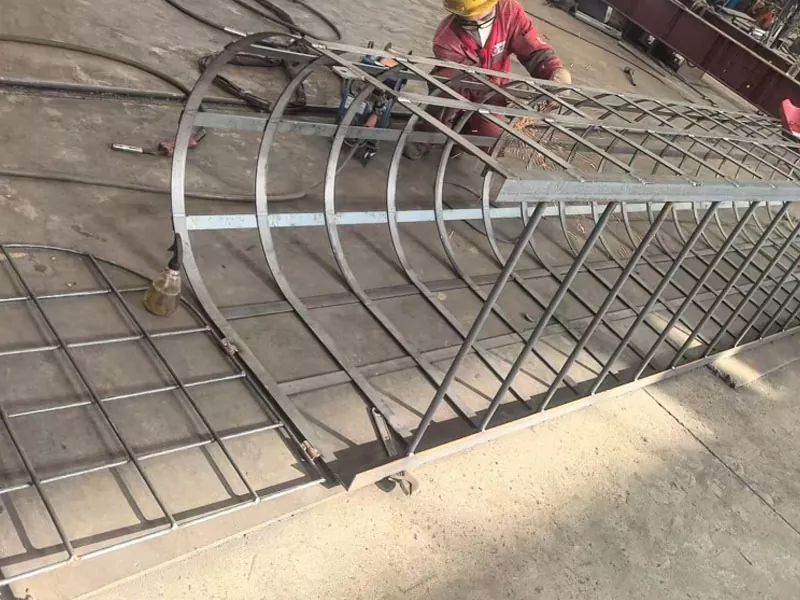
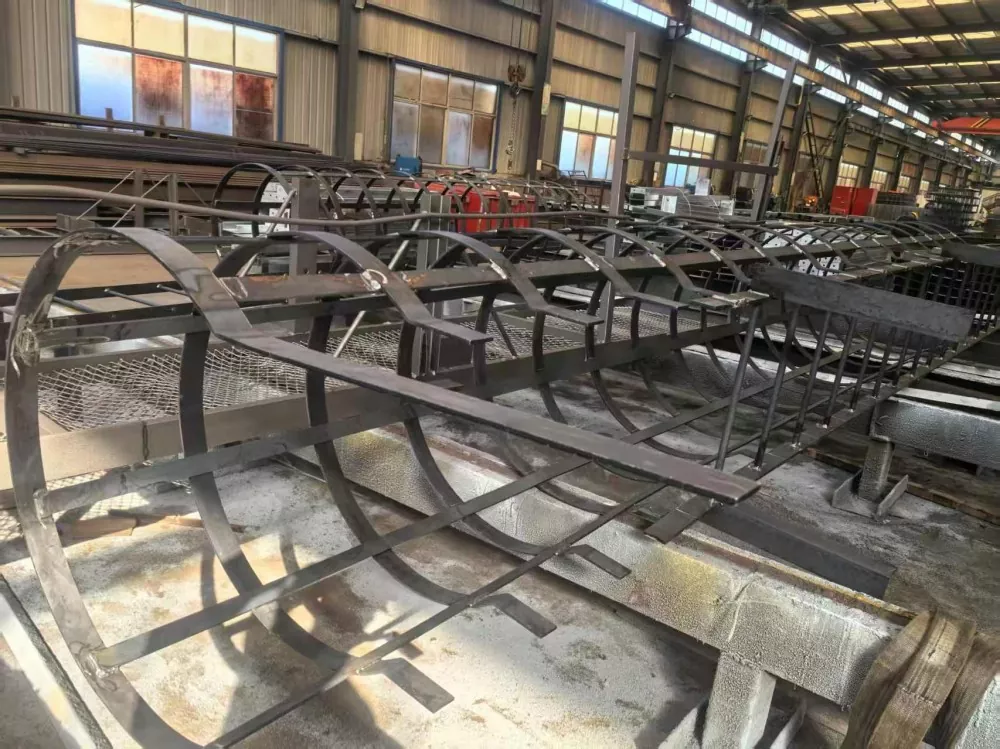
Guardrail Installation: For ladders exceeding 3 metres in height, guardrails must be installed 2.5 metres above the ground. The guardrail diameter should be between 700 mm and 800 mm. Horizontal rings should be made of 16 mm round steel, with a distance between rings of 300 mm to 450 mm. Vertical reinforcement bars must be made of 12 mm round steel, with at least four bars uniformly spaced. The safety cage must be installed continuously to the top of the ladder or resting platform.
Welding Requirements: Ladder beams must be connected to rungs, and to platforms or structural members, using full‑depth welding. The weld height must be no less than 0.7 times the minimum thickness of the connected component, and must be free of slag inclusions and porosity. Critical joints must also undergo flaw detection.
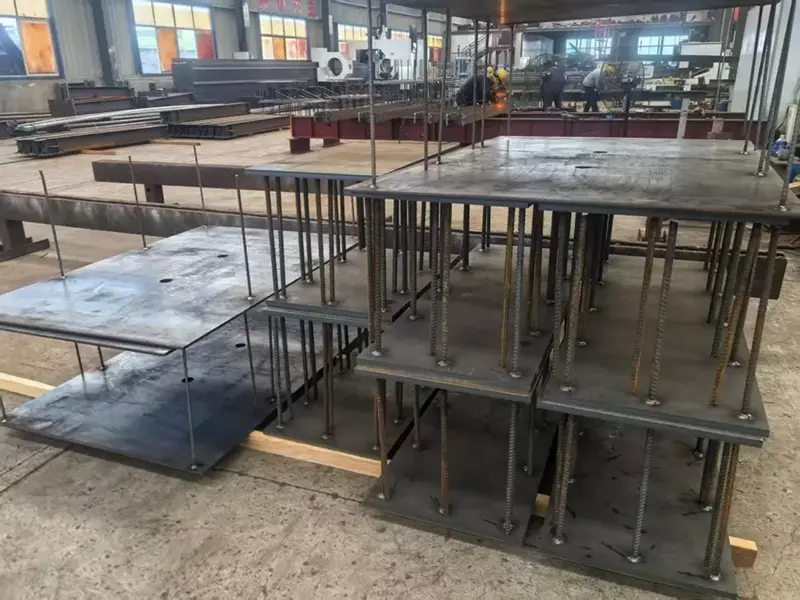
Embedded Parts: Ladder fixings must be connected using expansion bolts (M16 or larger) or embedded steel plates. The embedded steel plate must be at least 10 mm thick, the anchor rod diameter must be at least 12 mm, and the embedded depth must be at least 150 mm.
Rust Prevention: All steel components must be treated with two coats of anti‑rust primer and two coats of topcoat. For outdoor use, hot‑dip galvanising is recommended, with a zinc layer thickness of at least 85 μm.
Ladder Width: The clear width (the distance between the inner and outer sides of the ladder beams) is generally 400 mm. This can be increased to 600 mm for two‑person climbing, but requires a separate design.
Anti‑slip measures: The rungs can be knurled, drilled, or welded with anti‑slip strips (Ø6 mm round steel, with spacing of 10–15 mm). This is especially necessary in humid environments.
Q: What is the maximum height for a single section of the Metal Steel Ladder with Anti Slip Steps?
A: A single ladder section should not exceed 6 metres. For any height above that, LWY Steel Structure incorporates intermediate rest platforms to break the climb and provide a resting point. The platform must be at least 600 mm wide and equipped with guardrails of 1050 mm height, complying with international safety standards.
Q: How does the anti‑slip treatment perform in extremely oily or greasy conditions?
A: For such environments, LWY recommends our epoxy‑based coating with embedded alumina grit, which maintains a high coefficient of friction even when contaminated. Additionally, we can supply rungs with a perforated or serrated surface that allows oil to drain away, ensuring positive contact with footwear. All anti‑slip options are tested to meet or exceed ASTM D2047 standard for static coefficient of friction.
Q: Are these ladders certified for use in the European Union?
A: Yes, all LWY Steel Structure ladders carry CE certification under the EN 1090 standard, which covers structural steelwork and aluminium. We also provide complete test reports and declaration of performance, facilitating your project's compliance with EU construction regulations. For other regions, we can adapt to local codes such as OSHA (USA), AS/NZS (Australia), or CSA (Canada).
Q: What is the typical delivery time for a custom‑built Metal Steel Ladder ?
A: Standard production takes 30 days from receipt of confirmed order and deposit. For large quantities or complex customisations, we may split deliveries to meet your schedule. Expedited services are available upon request, and we will always provide a realistic timeline based on current production load and material availability.