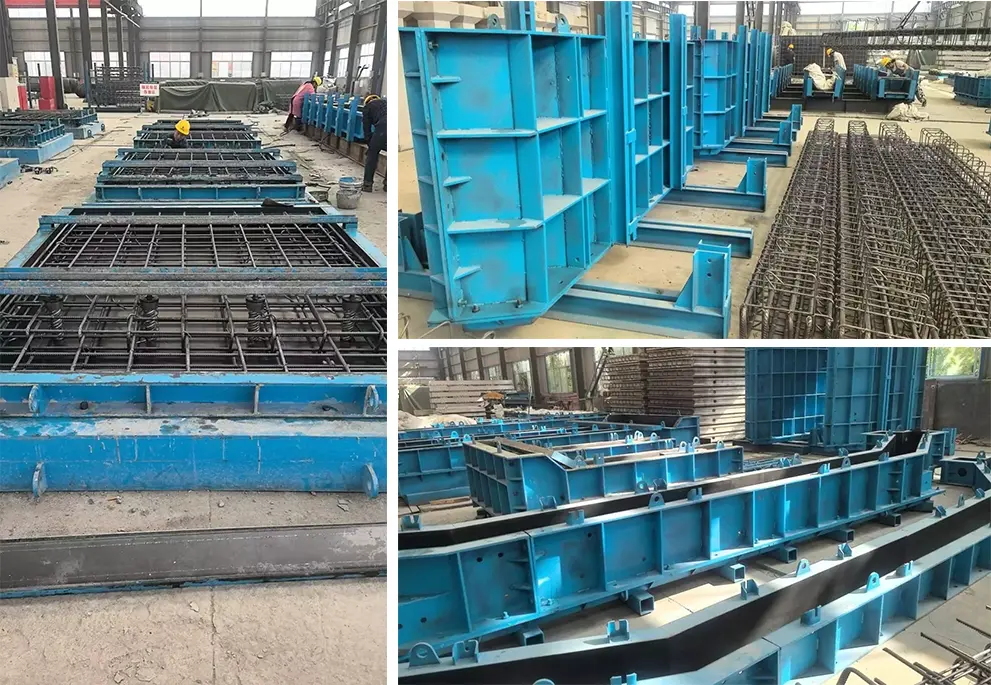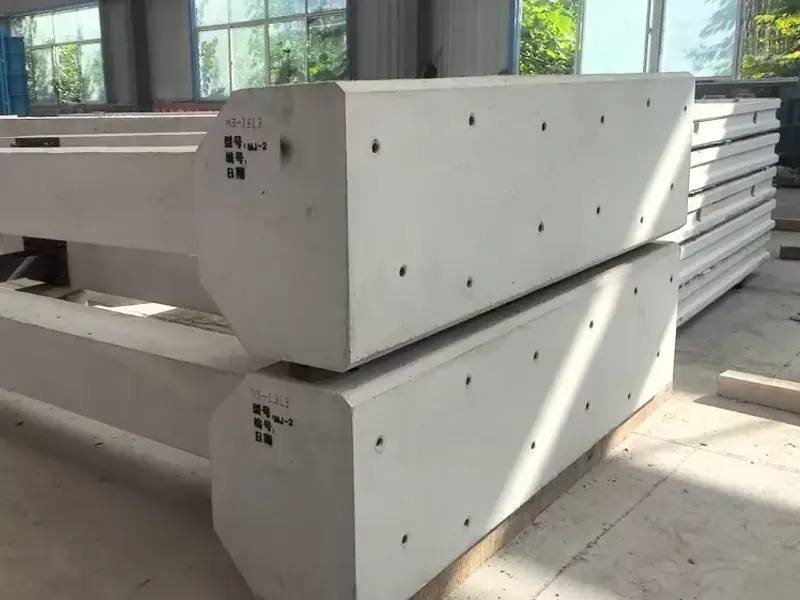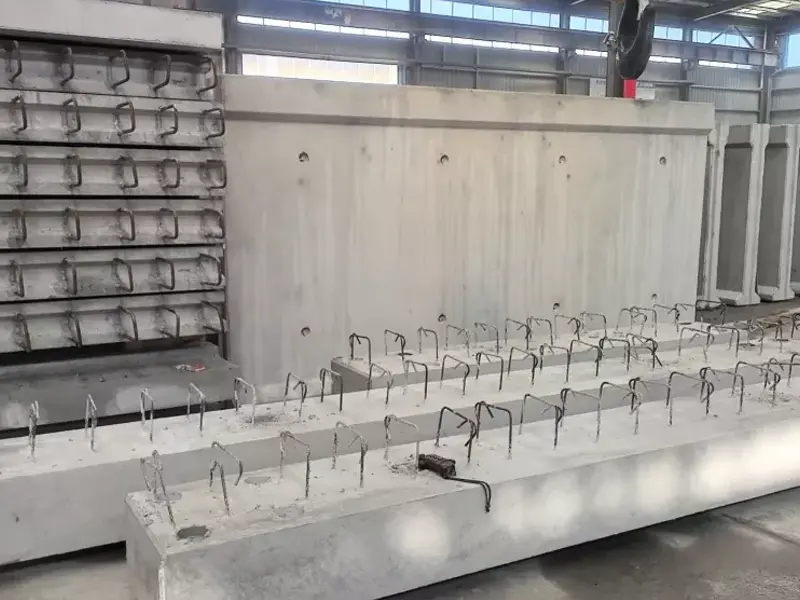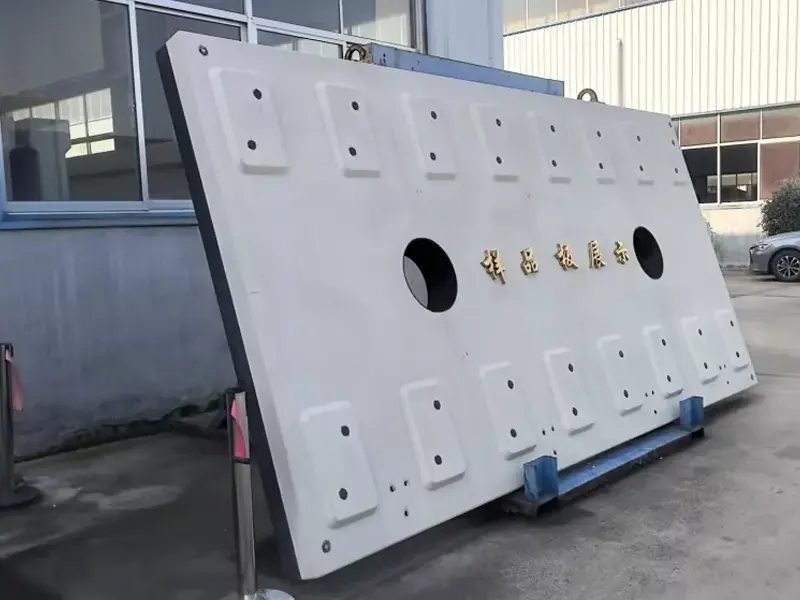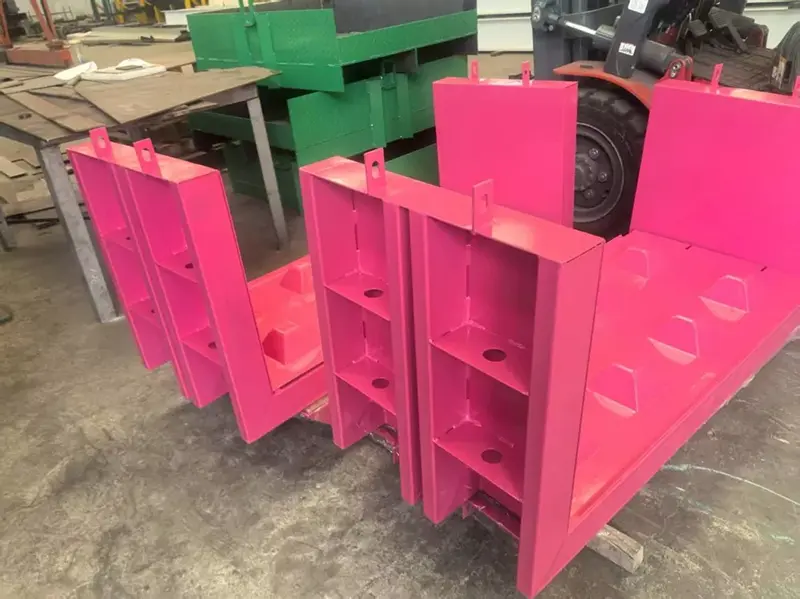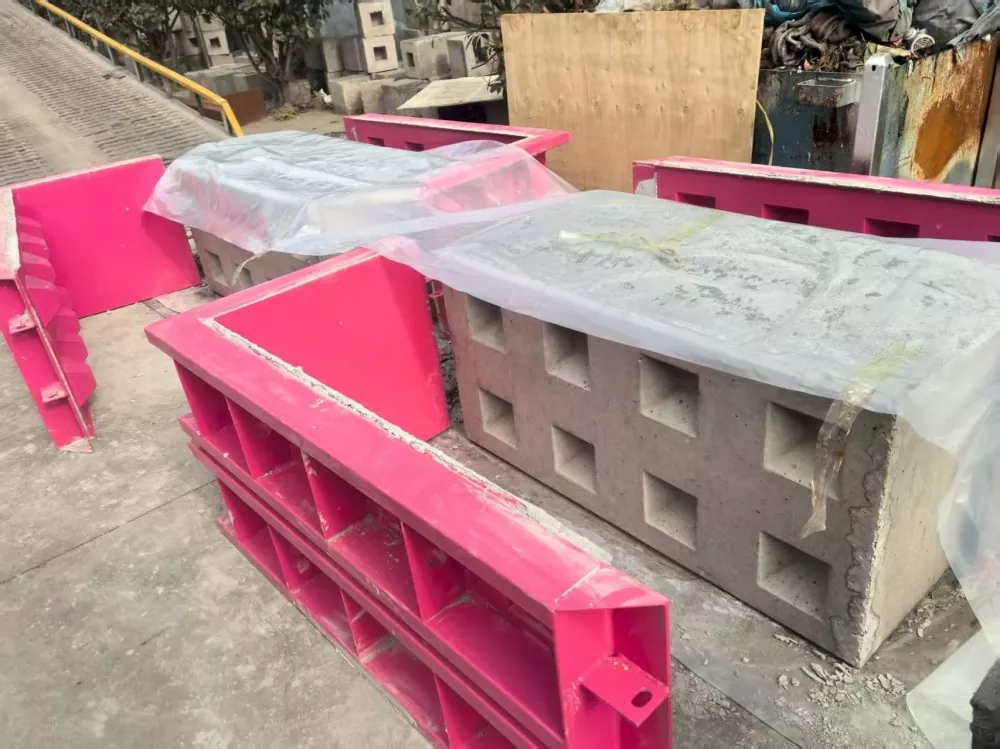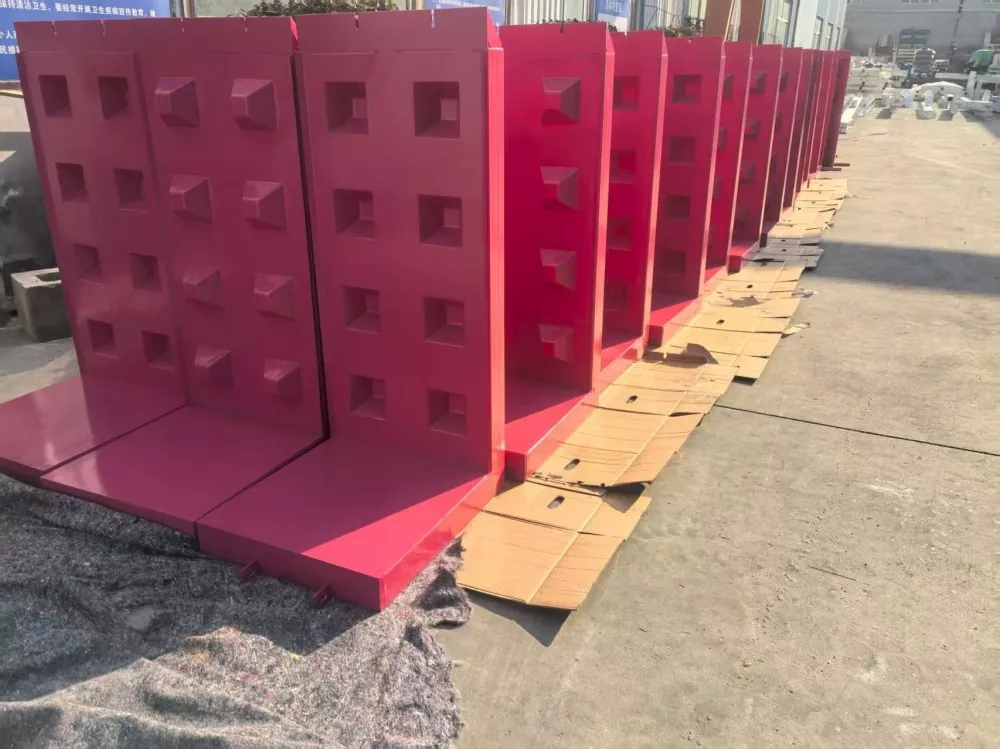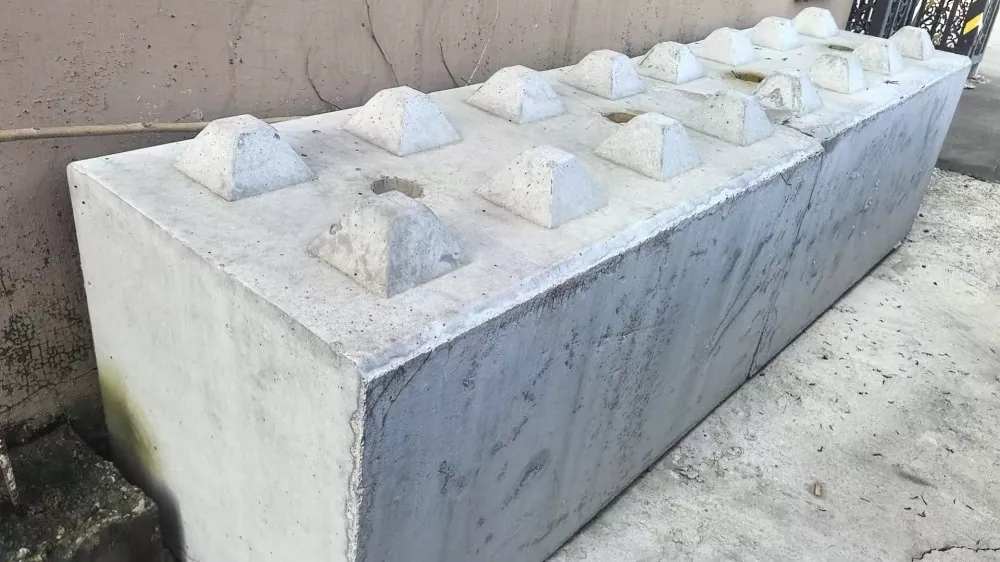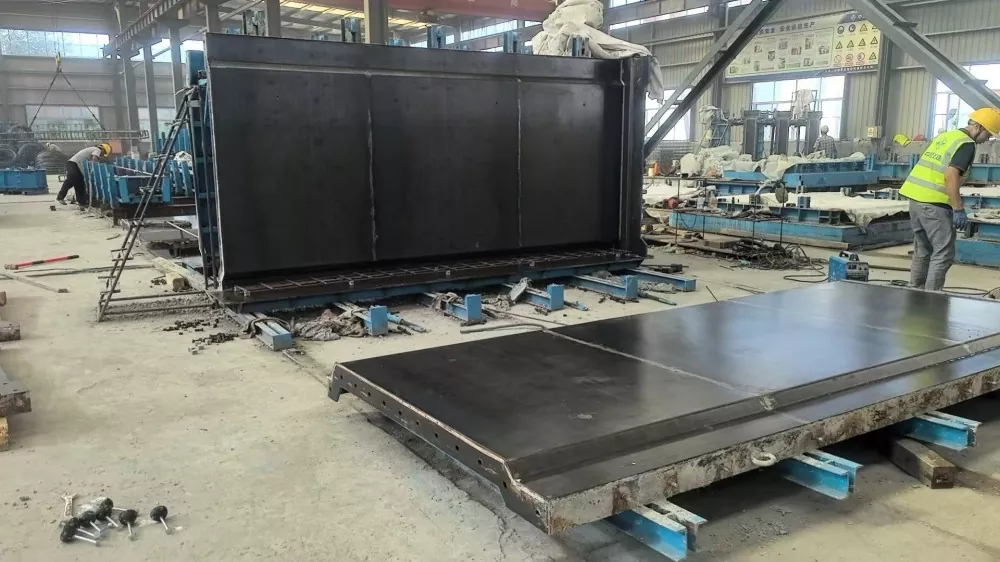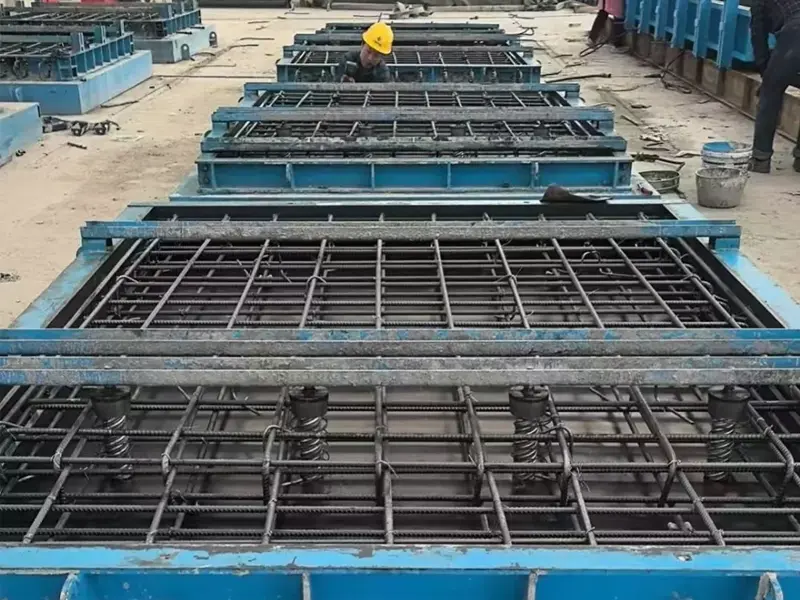
Heavy Duty Steel Concrete Formwork from LWY Steel Structure, a professional manufacturer established in 2003, is developed for concrete casting applications that require high rigidity, stable dimensions, and repeated use. The steel plate and section structure can be configured according to component size, concrete geometry, support conditions, and the actual forming process.
Concrete formwork needs to remain stable while fresh concrete is placed, compacted, and cured. For larger components, deeper sections, or repeated production, the forming structure is exposed to greater loads and more frequent assembly and stripping operations.
Heavy Duty Steel Concrete Formwork is intended for these conditions, with the design focusing on the relationship between the forming surface, reinforcing sections, support arrangement, and panel connections. Instead of treating the panel as an isolated steel plate, the complete forming structure is considered according to the dimensions and construction method of the concrete component.
This approach is particularly useful when dimensional consistency matters. If the form changes position or shape during casting, the resulting concrete component may require additional correction. A rigid and properly supported forming structure helps maintain the intended geometry during the casting process.
1. Deformation during pouring: Fresh concrete produces pressure against the forming surface. Panel rigidity and support spacing need to be considered together to control excessive deflection.
2. Panel displacement: Connected sections should remain correctly positioned throughout assembly and concrete placement.
3. Joint gaps: Poorly matched joints can allow cement paste to escape and may leave visible marks on the finished concrete.
4. Dimensional inconsistency: Repeated production requires the form geometry to remain stable from one casting cycle to the next.
5. Handling difficulties: Large panels require suitable connection and lifting arrangements so that installation and stripping can be carried out in a controlled sequence.
The required formwork configuration depends on the concrete component rather than simply the overall panel size. Length, width, height, wall thickness, concrete depth, casting sequence, support arrangement, and connection method all influence the structural requirements.
| Working Condition | Main Concern | Design Consideration | Practical Purpose |
|---|---|---|---|
| Large concrete components | Higher forming pressure | Panel rigidity and reinforcement | Maintain the required geometry during casting |
| Repeated component production | Frequent assembly and stripping | Durable structure and repeatable connections | Support consistent production cycles |
| Deep concrete sections | Greater lateral pressure | Support spacing and structural arrangement | Reduce excessive panel deformation |
| Multiple connected panels | Joint alignment and leakage | Connection design and panel matching | Keep adjacent sections properly positioned |
| Precision concrete components | Dimensional variation | Fabrication accuracy and inspection | Improve repeatability between components |
The comparison above shows why formwork selection should be related to the actual casting process. A panel with adequate strength may still require a suitable connection and support arrangement before it can function effectively as part of a complete forming system.
Steel formwork normally combines a steel plate with reinforcing steel sections. The plate provides the contact surface for concrete, while the sections increase rigidity and help maintain the overall panel geometry.
For Heavy Duty Steel Concrete Formwork, the structural arrangement can be determined according to the dimensions and shape of the concrete component, the expected construction loads, and the way the panels will be supported.
Strength and stiffness calculations can consider component dimensions, construction sequence, support spacing, connection positions, and other relevant loading conditions. This is important for large panels because the structural behavior of the complete assembly is different from that of a single steel sheet.
Horizontal and vertical loads also need to be considered during installation and casting. Appropriate support positions help distribute the loads and reduce unnecessary movement of the forming structure.
1. Panel thickness: The forming plate needs to provide a stable surface for the concrete and work with the reinforcing structure.
2. Section arrangement: Reinforcing sections should correspond with the size and geometry of the panel.
3. Support positions: Spacing should be determined according to the structural loading and panel configuration.
4. Connection locations: Connection points need to maintain the relationship between adjacent sections during casting.
A forming system can have a rigid panel but still be inconvenient if the individual sections are difficult to connect or align. Connection design therefore needs to be considered together with panel dimensions and the stripping sequence.
Flat splicing can be used for adjoining panels where a direct joint arrangement is appropriate. Tongue-and-groove connections can provide positioning between adjacent sections and help maintain alignment during assembly.
Bolts and snap-fit connections can also be used according to the specific configuration. The appropriate connection method depends on the panel structure, expected loads, assembly process, and requirements for repeated use.
Close-fitting joints are particularly important when the finished concrete surface needs to remain relatively clean. Reducing unnecessary gaps between panels can help limit cement paste leakage during casting.
Panel dimensions should not be determined only by manufacturing convenience. The available installation space, lifting method, access conditions, stripping direction, and storage arrangement can all influence the practical size of each section.
For larger formwork assemblies, electric motors or other mechanical assistance may be considered where the panel weight and site conditions make manual handling unsuitable.
One major reason steel formwork is used in repeated concrete production is its ability to maintain a stable forming structure over multiple casting cycles when it is correctly designed, handled, and maintained.
Heavy Duty Steel Concrete Formwork can be used for repeated production where the same or similar concrete components need to be formed several times. In this situation, the focus shifts from one-time structural performance to the stability of the entire working cycle.
Each cycle normally includes assembly, surface preparation, concrete placement, curing, stripping, cleaning, inspection, and preparation for the next use. The formwork should therefore be designed with these operations in mind.
1. Assembly: Panel positions and connections should be clearly defined to reduce unnecessary adjustment.
2. Casting: The forming structure needs to remain stable under the expected concrete pressure.
3. Stripping: Connections should allow the panels to be separated in an appropriate sequence.
4. Cleaning: Residual concrete should be removed without unnecessarily damaging the forming surface.
5. Inspection: Panels can be checked for deformation, connection condition, surface damage, and dimensional changes before the next cycle.
Proper maintenance is especially important when the same form is used repeatedly. The service condition of the panel can influence both the finished concrete surface and the dimensional consistency of subsequent components.
The geometry of the finished concrete component is directly related to the geometry of the forming system. Manufacturing accuracy therefore matters before the formwork reaches the construction site.
For beam and slab formwork, dimensional tolerances can generally be controlled within approximately ±5 mm depending on the component and project requirements. The actual tolerance should always be confirmed against the applicable drawings and technical specifications.
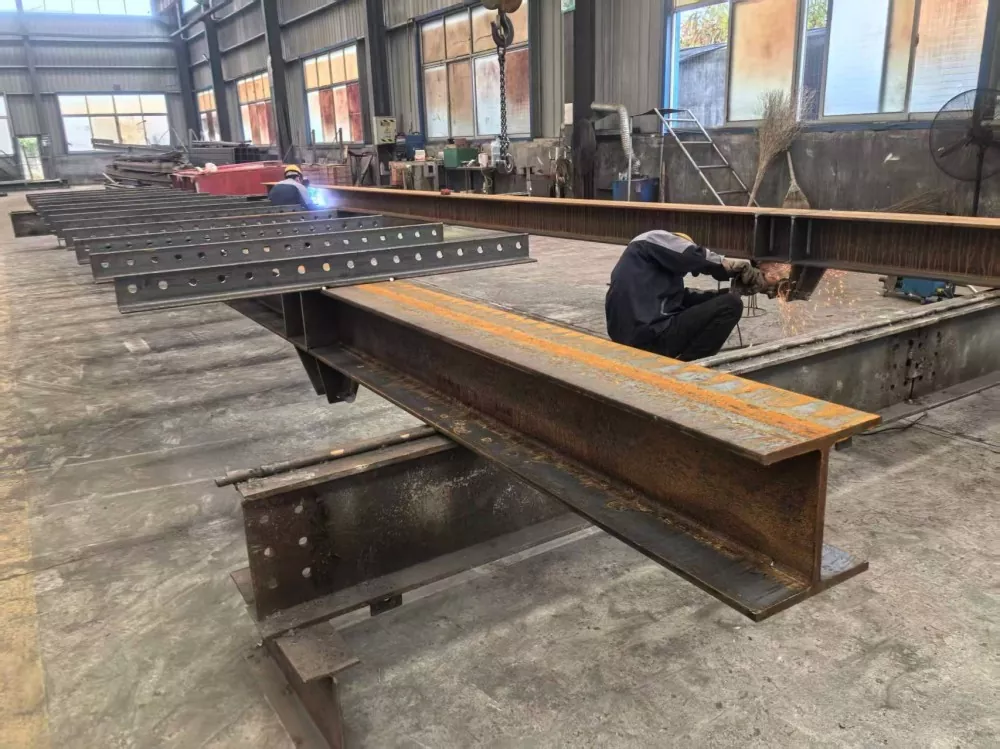
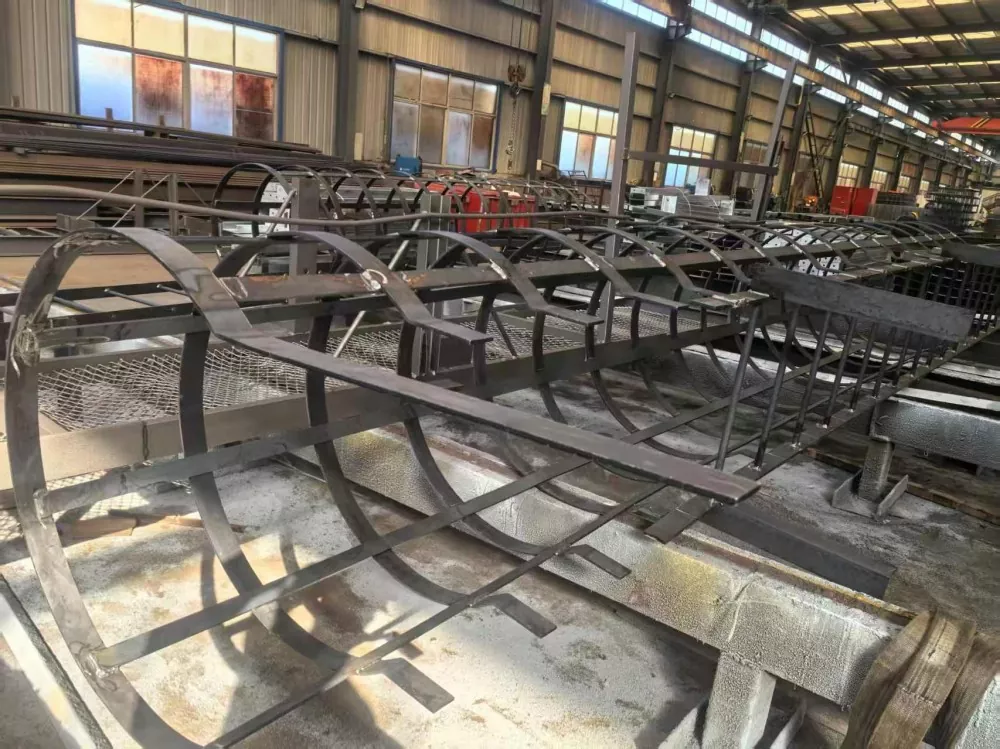
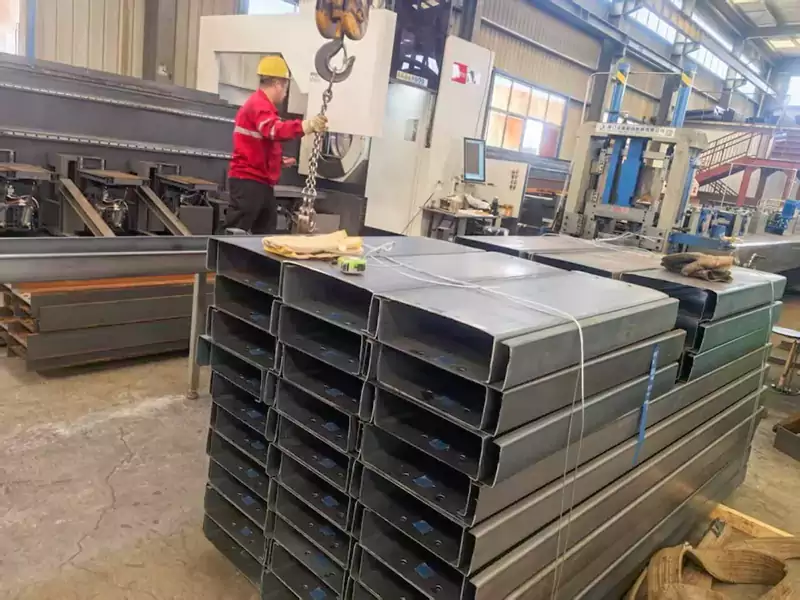
Fabrication involves multiple operations, including cutting, drilling, welding, straightening, assembly, and surface treatment. Errors introduced during one stage can affect subsequent assembly, particularly when several panels need to be connected into one large forming structure.
LWY Steel Structure has processing equipment including laser plate cutters, laser tube cutters, CNC multi-head cutting machines, drilling equipment, automatic submerged arc welding machines, straightening machines, shot blasting and rust removal machines, airless spraying machines, and H-beam automatic welding machines.
This equipment supports different stages of steel component fabrication and provides a production basis for manufacturing structural panels and related steel assemblies.
Quality control for steel formwork should cover more than the appearance of the finished panel. Raw material condition, fabrication accuracy, welding quality, dimensional consistency, and finished-product inspection all contribute to the final result.
LWY Steel Structure states that its quality management follows ISO9001-2016. Its described inspection process includes three main stages.
1. Raw material inspection: Steel materials can be checked for composition and strength before entering production.
2. Process inspection: Quality checks are carried out during manufacturing, with corresponding records maintained for the production process.
3. Finished-product testing: Relevant inspection data is collected and archived after production.
For international steel structure projects, the company also states that its products have CE certification according to EN1090, together with relevant testing documentation.
The exact inspection scope should be determined according to the project drawings, applicable standards, and the technical requirements of the specific formwork system.
The characteristics of Heavy Duty Steel Concrete Formwork make it suitable for applications where steel forming surfaces, structural rigidity, and repeated use are required.
1. Precast concrete components: Suitable for factory-based production of components that require consistent dimensions and repeated casting.
2. Beam and slab production: Can be configured for components where stable forming geometry is important throughout the casting process.
3. Modular building components: Useful for standardized concrete elements produced according to repeated dimensions.
4. Large structural components: Suitable for forming applications where panel rigidity and support stability are important.
5. Industrial construction: Can be adapted to concrete forming requirements associated with larger structures and organized production processes.
The actual panel configuration should be determined from the component drawings and construction method rather than applying one standard structure to every project.
LWY Steel Structure was established in 2003 and specializes in the design, development, and manufacturing of steel structures and related steel products.
The company has 200 employees, including 20 engineering technicians, 50 construction workers, and 30 management personnel. Its reported annual processing capacity exceeds 20,000 tons of steel components and 500,000 square meters of maintenance materials.
The manufacturing scope includes steel structure houses, workshops, accessories, offshore platforms, modular houses, and other steel structural products. This production background involves multiple fabrication processes that are also relevant to the manufacture of steel formwork components.
The company is located in Qingdao West Coast New Economic Zone, with Qingdao Port approximately 36 km away and Jiaodong International Airport approximately 60 km away. Its products have been exported to more than 50 countries and regions.
A detailed technical configuration becomes easier when the main construction information is available before production. The following details can help define the structure and connection arrangement.
1. Component drawings: Provide the complete length, width, height, thickness, shape, openings, and other dimensional information.
2. Concrete conditions: Specify concrete type, pouring method, casting sequence, and relevant construction conditions.
3. Reinforcement details: Show reinforcement positions and embedded parts that may influence the internal forming space.
4. Support requirements: Define available support points, lifting positions, and site conditions where applicable.
5. Reuse requirements: Indicate whether the same formwork will be used for repeated components.
6. Applicable standards: Identify the required national, regional, or project-specific technical standards and documentation.
With these details, the formwork structure can be considered as a complete system rather than simply a collection of steel panels.
After fabrication, the formwork needs to arrive at the construction location in a condition suitable for assembly. Panel dimensions, transportation arrangements, lifting points, packaging, and delivery sequence can therefore influence the overall logistics plan.
LWY Steel Structure states that general delivery is within 30 days after payment, although the actual schedule depends on building size and quantity. For larger projects, partial shipments can be arranged according to production and site requirements.
Detailed construction drawings and construction manuals can also be provided to support installation. These documents help clarify panel positions, connection methods, assembly sequences, and other relevant installation information.
For complex projects, the installation method should be reviewed together with the panel configuration before fabrication begins. This helps avoid situations where a technically suitable panel becomes difficult to handle because of site restrictions.
A: It can be used for large concrete components, precast elements, beam and slab production, modular building components, and other applications where structural rigidity, dimensional stability, and repeated use are required. The final configuration depends on the component drawings and casting conditions.
A: Panel deformation is related to the forming plate, reinforcing sections, support spacing, connection arrangement, component dimensions, and concrete pressure. These factors should be considered together when determining the structural configuration.
A: Depending on the design, flat splicing, tongue-and-groove connections, bolts, and snap-fit components can be used. The appropriate method depends on the panel structure and assembly requirements.
A: Yes. Steel formwork is suitable for repeated casting when the panels are properly assembled, cleaned, inspected, and maintained between cycles. Repeated production also makes dimensional stability and connection repeatability particularly important.
A: Key information includes component dimensions, concrete geometry, reinforcement arrangement, casting sequence, support conditions, connection requirements, lifting method, reuse frequency, and applicable technical standards.
A: The company states that its quality management follows ISO9001-2016. Its described process covers raw material inspection, production-stage quality checks, and finished-product testing, with relevant inspection records maintained.
A: The company states that its steel structure products have CE certification according to EN1090 and corresponding testing documentation. Specific documentation should be confirmed according to the requirements of the individual project.
A: The stated general delivery period is within 30 days after payment. The actual schedule depends on the building size, quantity, configuration, and production requirements. Larger projects may use partial shipments.
A: Detailed construction drawings and construction manuals can be provided for installation. The documentation content can be determined according to the formwork configuration and project requirements.