Steel Formwork for Prefabricated Concrete Components from LWY Steel Structure is designed for projects that require repeatable concrete shapes, stable dimensions, and reliable formwork performance. As a China manufacturer with more than 20 years of steel structure experience, LWY combines steel processing capabilities, production equipment, engineering knowledge, and quality management to support the manufacture of concrete components with consistent form geometry. The company was established in 2003 and has exported its products to more than 50 countries and regions.
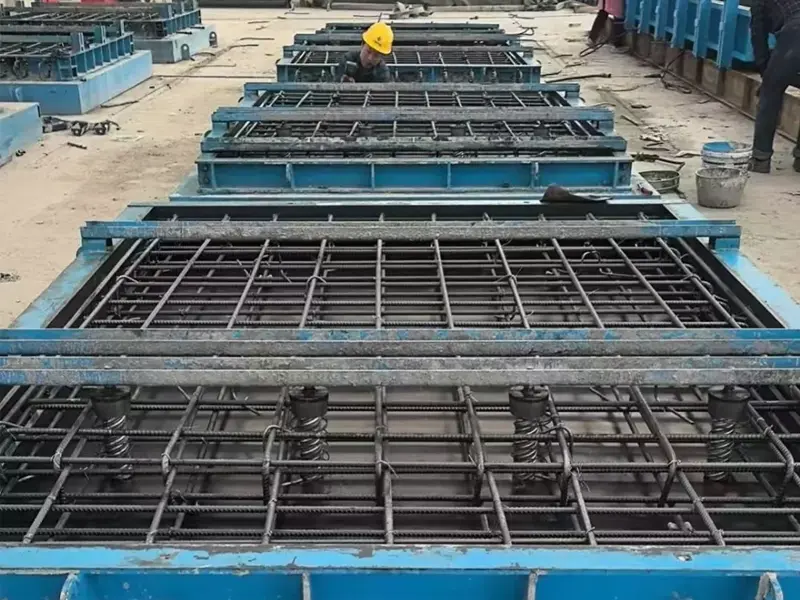
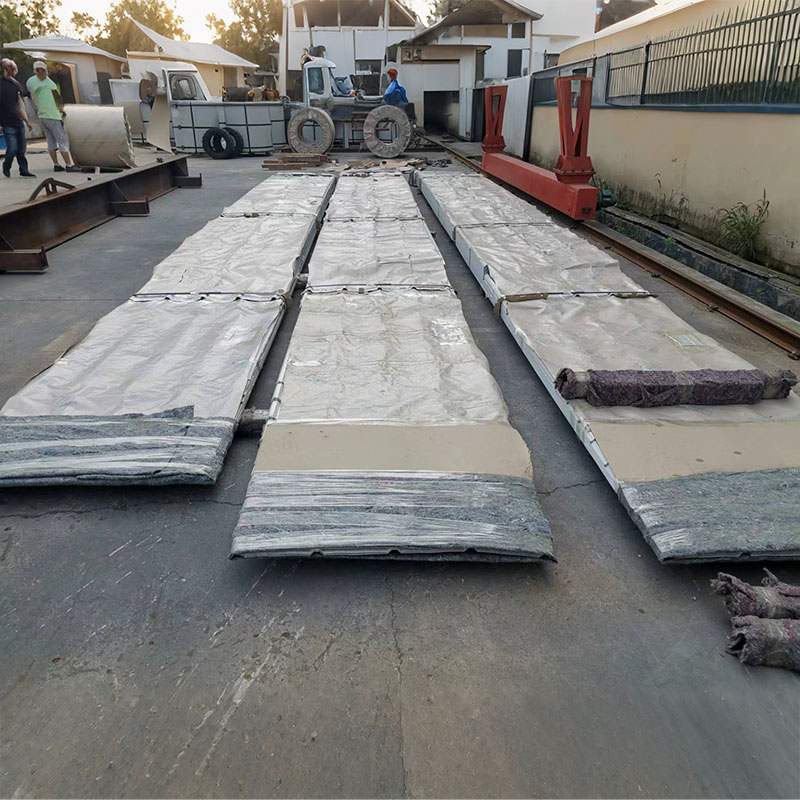
Steel Formwork for Prefabricated Concrete Components is particularly suitable when concrete elements need to be produced repeatedly according to defined dimensions and shapes. Unlike one-time formwork arrangements, a reusable steel formwork solution can provide a stable forming surface for repeated production, helping manufacturers maintain a more consistent component geometry throughout a production cycle.
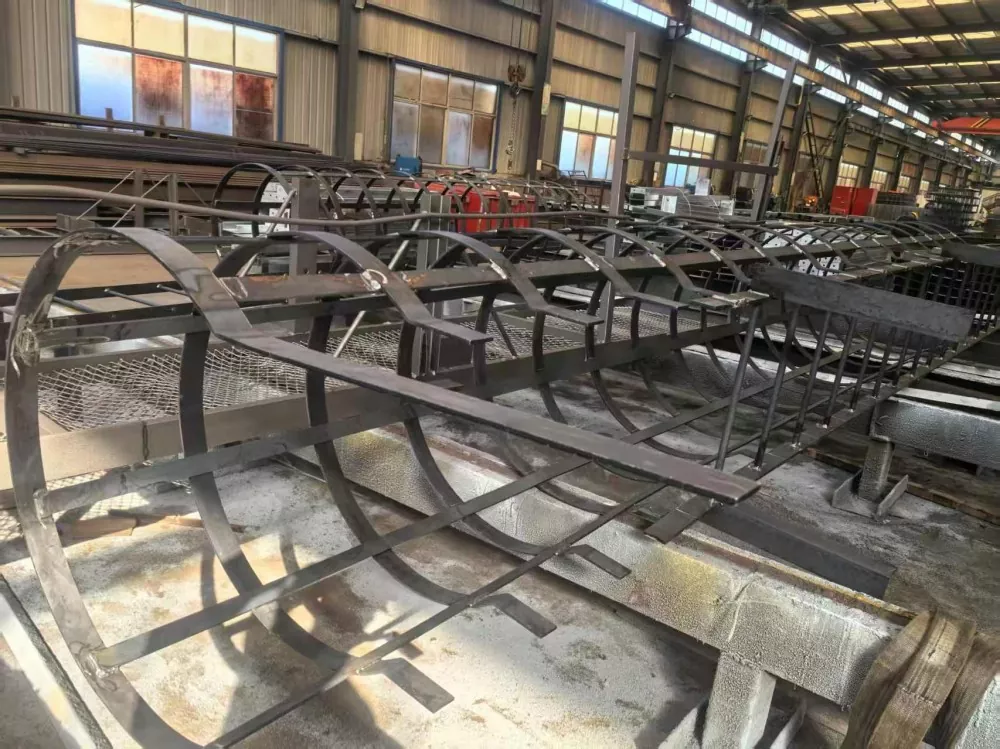
For precast concrete production, dimensional control is important because the finished components may need to connect with other structural elements during later installation. LWY's formwork is developed with attention to geometric accuracy, rigidity, connection methods, and overall stability. The company also applies advanced steel processing and manufacturing equipment to support the production of structural and metal components.
A prefabricated component production line often involves casting similar beams, slabs, panels, or other concrete elements in repeated cycles. The formwork therefore needs to maintain its shape while handling the weight and construction loads generated during concrete casting. LWY's steel formwork is designed with dimensional accuracy and structural rigidity in mind, supporting the repeatable production requirements of precast applications.
The controlled nature of prefabricated concrete production makes it easier to organize forming, pouring, curing, demolding, inspection, and subsequent handling as a defined production process. A stable steel formwork structure can become an important part of this workflow by providing a reliable forming base and reducing unnecessary adjustment between production cycles.
The performance of formwork directly influences the geometry of the concrete component being produced. LWY's steel structure formwork focuses on dimensional accuracy, strength, rigidity, and stability so that the form can withstand the loads generated during concrete casting without unwanted deformation.
Several technical characteristics are particularly relevant to prefabricated concrete component manufacturing:
1. Dimensional accuracy: For beam and slab formwork, the length, width, and height tolerances are generally kept within ±5mm according to the product information provided by LWY.
2. High strength and rigidity: The formwork is designed to withstand the weight of concrete and construction loads while maintaining sufficient rigidity during pouring.
3. Stable support: The support system is configured according to the formwork structure, with attention to support spacing, height, and connection methods to maintain overall stability.
4. Reliable connections: Flat splicing, tongue-and-groove splicing, bolts, and snap-fit connections can be used according to the formwork configuration, helping create secure joints and minimize concrete leakage.
These characteristics are especially valuable for prefabricated components because repeated production places greater emphasis on consistency. When the same form is used through multiple casting cycles, stable dimensions and reliable connections help create a more controlled production environment.
The combination of strength and rigidity also helps the formwork resist deformation during concrete pouring. For large formwork structures, electric motors can be used to assist operation, providing an option for improving handling efficiency in larger-scale applications.
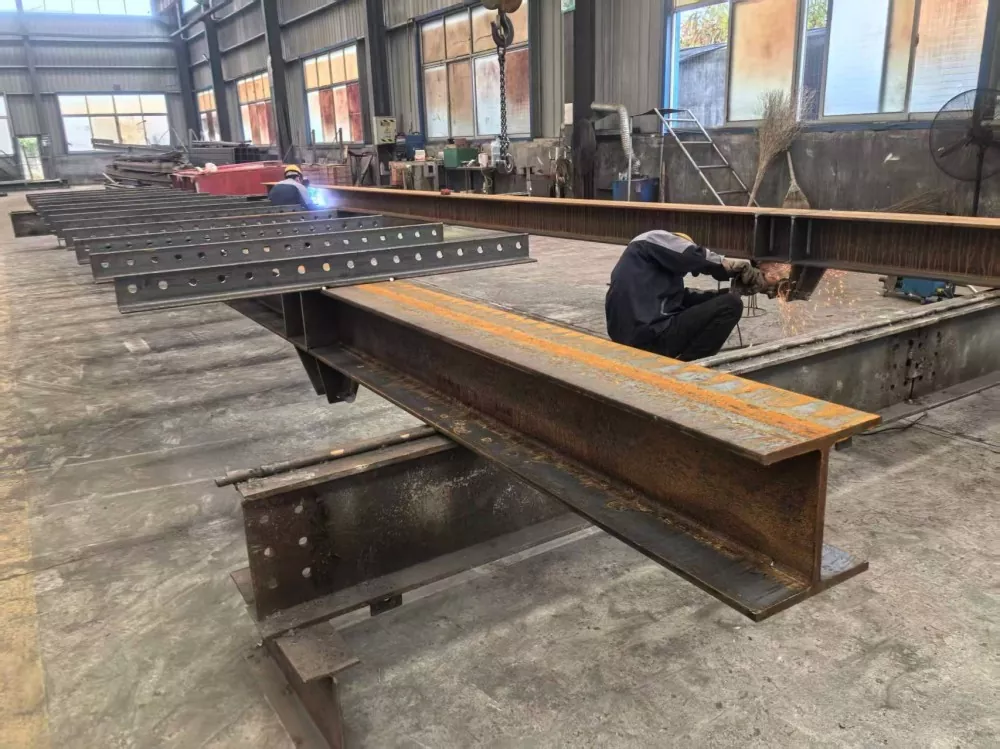
The quality of a steel formwork system depends not only on the final assembly but also on the steel processing and manufacturing capabilities behind it. LWY Steel Structure operates from the Industrial Park of Qingdao West Coast New Economic Zone and has developed capabilities covering steel structure design, R&D, manufacturing, welding, processing, and related metal component production.
The company has a professional team of 200 employees, including 20 engineering technicians, 50 construction workers, and 30 management staff. Its manufacturing capability includes an annual processing capacity of more than 20,000 tons of steel components. These resources provide a practical production foundation for projects involving customized steel components and structural products.
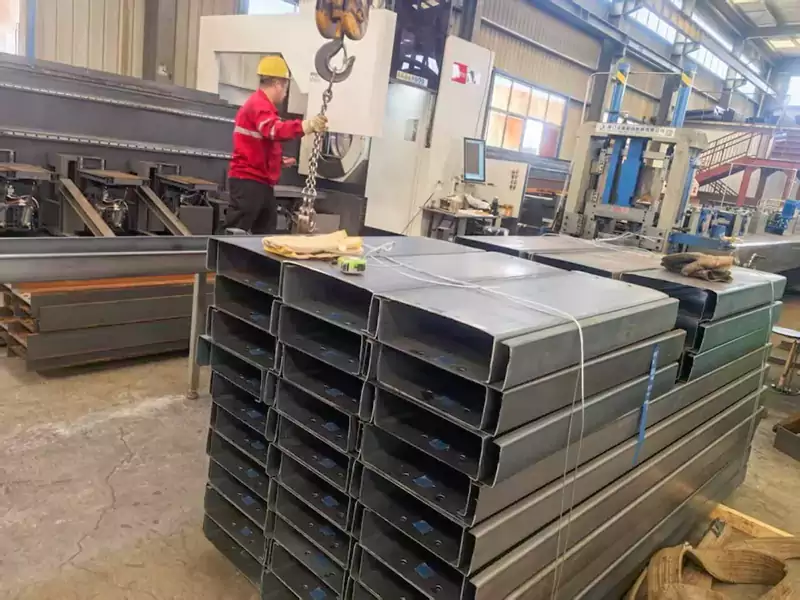
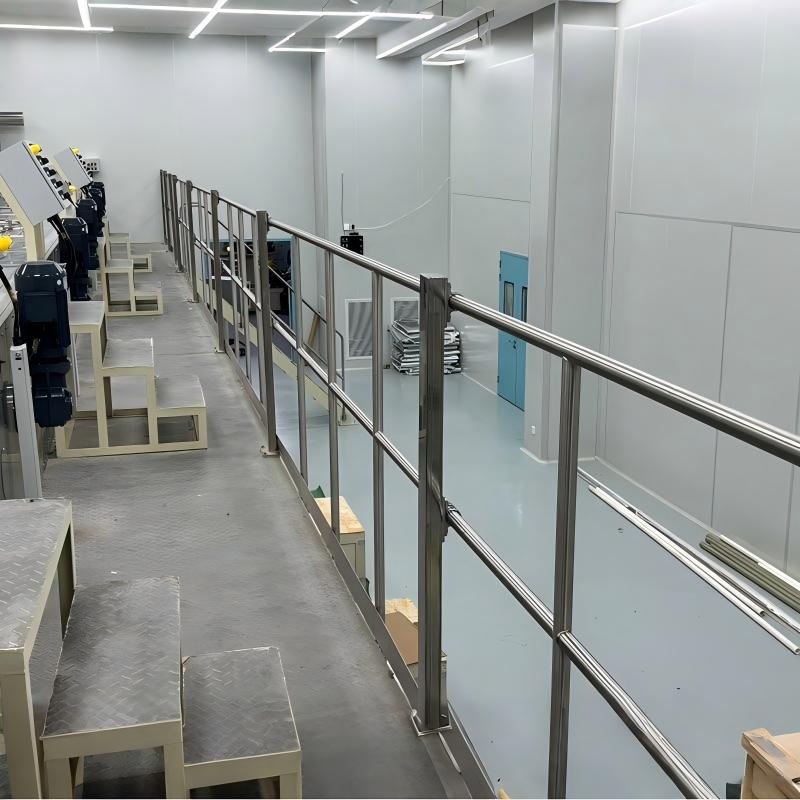
LWY's production equipment includes processing centers, CNC lathes, laser tube cutting machines, laser plate cutting machines, CNC multi-head cutting machines, drilling equipment, automatic submerged arc welding machines, straightening machines, shot blasting and rust removal machines, airless spraying machines, and H-beam automatic welding machines.
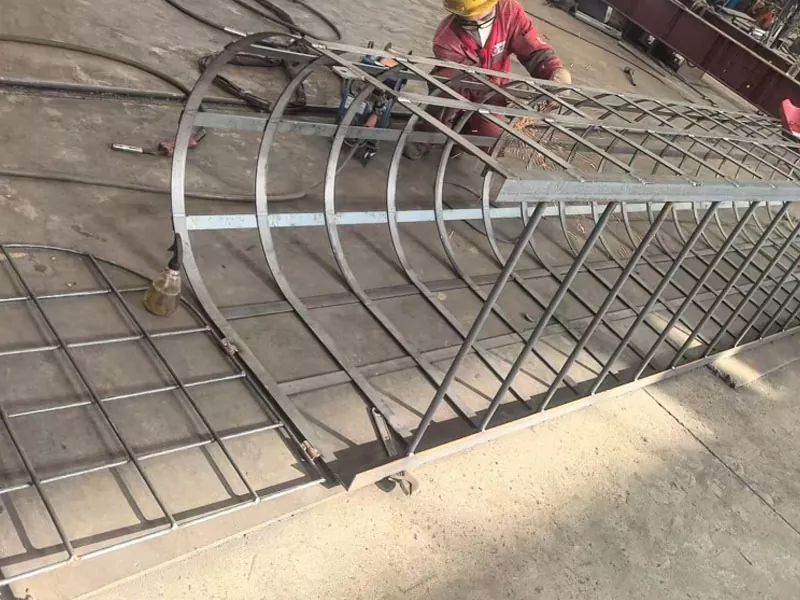
For formwork manufacturing, different stages of cutting, drilling, welding, straightening, and surface treatment influence the final geometry and usability of the finished structure. The availability of dedicated processing equipment allows the company to carry out multiple manufacturing operations within its own production system rather than relying only on manual fabrication.
This manufacturing background is also relevant when a project requires formwork components with different dimensions or configurations. The engineering and production teams can work around the actual component requirements, while the fabrication process remains focused on structural accuracy and reliable assembly.
When concrete components are manufactured away from the final construction location, the forming system must support an organized and repeatable production process. Steel formwork provides a rigid forming structure that can be used for repeated casting, while its connection design allows components to be assembled and removed according to the production process.
For contractors, precast manufacturers, and engineering companies, the value of Steel Formwork for Prefabricated Concrete Components is not limited to the physical form itself. A well-designed formwork system can support a more predictable workflow from preparation to demolding.
1. Repeatable production: A reusable steel form can support multiple casting cycles where similar concrete components are required.
2. Better dimensional control: Stable form geometry helps maintain the intended dimensions of repeated concrete elements.
3. Easier assembly and removal: Practical splicing and connection methods make installation and dismantling more convenient.
4. Reduced concrete leakage: Tight joints between connected formwork sections help reduce leakage during concrete pouring.
5. Adaptable production arrangement: Different formwork configurations can be arranged according to component size, shape, support requirements, and the construction process.
For projects where concrete components are produced in batches, these practical characteristics can help create a more orderly forming process and reduce repeated adjustment work.
Steel Formwork for Prefabricated Concrete Components can be considered for manufacturing environments where concrete elements are produced repeatedly and require controlled dimensions. The application should be selected according to the actual component geometry, loading conditions, production method, and required support arrangement.
The most direct application is the repeated production of prefabricated concrete components. A rigid steel forming structure can provide a defined cavity for concrete casting and can be reused when the production design remains consistent.
Modular construction relies on components that can be manufactured in a controlled environment and later assembled as part of a larger building system. Accurate formwork can support the production of repeatable concrete elements used within such construction workflows.
LWY's existing product information specifically refers to beam and slab formwork and identifies dimensional control for length, width, and height. This makes the formwork relevant to production processes where the geometry of repeated structural elements needs to remain consistent.
Some engineering projects require components with particular dimensions or forming arrangements. In these situations, formwork design needs to consider the component size and shape together with the construction process and support system. LWY's engineering and steel processing capabilities provide a basis for handling non-standard metal structural component requirements.
The appropriate application depends on the component design and project requirements. Detailed drawings and production information should be reviewed before manufacturing so that the formwork configuration, support method, and connection arrangement can be properly determined.
LWY Steel Structure places quality and safety at the center of its manufacturing philosophy and states its quality principle as "quality for survival." The company also emphasizes continuous improvement in technology and management, with a focus on customer satisfaction, energy conservation, cost reduction, and environmentally friendly construction practices.
For a product such as Steel Formwork for Prefabricated Concrete Components, quality management needs to cover more than the appearance of the finished steel. Dimensional accuracy, welding quality, connection reliability, structural rigidity, and overall fabrication consistency all influence how the formwork performs during actual use.
LWY's production system includes multiple types of processing and inspection-related equipment, while its engineering team supports steel structure design and development. The company has also been recognized as a specialized and innovative enterprise in Qingdao and a national high-tech enterprise.
The company provides standardized processing of hardware components, non-standard equipment parts, ship outfitting parts, and metal structural parts for domestic and international clients. This experience in customized metal component manufacturing is relevant when a formwork project requires a configuration beyond a standard arrangement.
For international purchasers, supplier capability is an important part of formwork sourcing. LWY Steel Structure has been operating since 2003 and serves domestic and international customers. Its products, including steel structures, steel structure houses, steel structure accessories, steel structure workshops, offshore platforms, and modular houses, are exported to more than 50 countries and regions worldwide.
The company's location also supports international logistics. Its facility is located in Qingdao West Coast New Economic Zone, with Jiaodong International Airport approximately 60 kilometers away and Qingdao Port approximately 36 kilometers away. This transportation access provides a practical logistics advantage for international steel product shipments.
For buyers evaluating a steel formwork supplier, the combination of long-term operating experience, engineering personnel, steel processing equipment, international export experience, and documented production capability provides useful information for supplier assessment. Project-specific requirements should still be confirmed through drawings, technical specifications, quantities, and delivery arrangements before an order is finalized.
A: It is used to create a defined forming space for concrete components that are produced repeatedly. The steel structure provides a rigid forming surface and can be assembled, used for casting, and removed according to the production process. It is particularly relevant to precast and prefabricated component manufacturing where consistent geometry is important.
A: According to LWY's product information, beam and slab formwork maintains length, width, and height tolerances generally within ±5mm. The actual tolerance requirement should be confirmed against the engineering drawings and component specifications before production.
A: The formwork is designed with strength, rigidity, dimensional accuracy, and practical connection methods. These characteristics allow the forming structure to maintain its geometry during concrete pouring and make it possible to assemble and remove the formwork for repeated production cycles when the component design remains suitable.
A: The configuration should be determined according to the dimensions and shape of the concrete component, the construction process, and the required support arrangement. LWY has experience in steel structure design, manufacturing, and non-standard metal structural parts, so project drawings and technical requirements can be reviewed before the formwork configuration is finalized.
A: LWY places emphasis on quality management, production technology, and process control. Its manufacturing facilities include CNC processing equipment, laser cutting machines, drilling equipment, automatic welding machines, straightening equipment, shot blasting and rust removal machines, and other production equipment. The company also states that it continuously improves technology and management to support product quality and customer satisfaction.
A: Yes. LWY Steel Structure was established in 2003, and its products are exported to more than 50 countries and regions. The company is located in Qingdao West Coast New Economic Zone, with Qingdao Port approximately 36 kilometers away and Jiaodong International Airport approximately 60 kilometers away, supporting international logistics arrangements.
A: LWY states that it provides detailed construction drawings and construction manuals to help customers with building setup and installation. For a specific formwork project, the required drawings and technical documents should be confirmed according to the product configuration and project requirements.
For prefabricated concrete production, reliable forming starts with the right combination of dimensional control, structural rigidity, connection design, manufacturing capability, and project-specific engineering requirements. LWY Steel Structure combines steel fabrication experience, professional engineering resources, modern processing equipment, and international project experience to provide a practical foundation for customized formwork requirements. Contact LWY with your component drawings, dimensions, quantity, and production requirements to discuss a suitable steel formwork configuration.